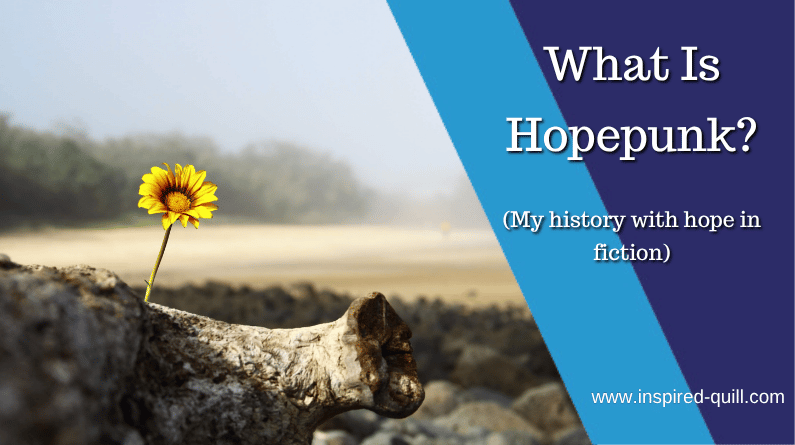
“What is hope if not delusion?”
In 2007, I was sat in a seminar on Shakespeare. We were talking about King Lear, about the scene towards the end where (spoilers) Cordelia has died and Lear comes onstage howling. He announces her as dead, straight off. But then he refuses to believe his own words. He calls for a mirror and then a feather to check her breath. He announces that the feather has moved. He says that she lives. He is wrong. It’s unclear if anyone has even brought him a looking glass or a feather – there’s no stage direction. What’s clear is that Cordelia is dead and Lear is there with her body, imagining as hard as he can that reality might be something other than what it is.
I remark that this is so tragic because, for perhaps the first time in the play, one of Lear’s delusions is about something that we want him to be right about.
“You could call that hope.” says a classmate.
“Well, what is hope if not delusion?” I reply.
“That’s pretty bleak, Webster.”
“It’s a pretty bleak play.”
In 2016 or so, I am sitting with my friend (and incredibly talented writer) Lucy Ayrton and her husband Paul. We are discussing hope and optimism over a glass of wine. Lucy tells me that she’s not a fan of the word ‘hope’, because it seems to her to be the enemy of action. It’s another opiate of the masses; just sit there and hope, gang, it’ll get better eventually so there’s no need to do anything inconvenient like change.
“I think hope is just patience that you’ve shined up a bit.” she says.
I don’t have anything to say in response, but, a glass of wine or two later, Lucy recommends the novel Station Eleven.
In 2017, Alexandra Rowland coins the term ‘Hopepunk’ in a tumblr post that read:
“The opposite of grimdark is hopepunk. Pass it on.”
She has since expanded on what she meant by this on tumblr and in the article from 2019: One Atom of Justice, One Molecule of Mercy, and the Empire of Unsheathed Knives’.
In that article, she writes: “Be spiteful. Be petty. Be rude. Spray-paint someone’s house. Grab your local senator and tar and feather them, I don’t know. Do whatever you have to do, as long as you’re doing something, as long as you’re taking hold of the world around you in a real way and yanking it in the direction of Slightly Less Terrible.”
When I read that for the first time, I felt a lot of cogs click into place in my brain.
She also writes: “You know why humans are so great at being monstrous to each other? Because when you forget that someone is a person, when you forget that they laugh and cry and love their children, being monstrous to them feels good.”
In 2024, I hosted a meetup for fans of hopepunk at WorldCon in Glasgow. We were given one little table in the big exhibition and social hall – enough people turned up that we had to spill across to occupy several more tables. One person was talking about hopepunk in terms of activism and community building, of doing the unglamorous and undramatic work of knocking on doors to talk about issues. He asked: when so much of real-world work that is hopepunk in practice is repetitive and slow, how do we translate that into fiction that people will actually want to read?
In response, I talked about roleplaying games. I talked about how the game master of my home game is incredibly talented and creates amazing, sweeping stories. They write characters who are full of life and complexity and drama and hubris. They write astoundingly flawed heroes and magically compelling villains, and they blur the lines between the two with intelligent pathos. But.
But.
The thing we, the players, go really feral for? The thing that makes us throw up our hands and scream and cry because we love it so much? It’s the ordinary people. The random people. The throwaway NPCs (non player characters) that we immediately pack-bond with and adopt.
If we’ll fall head-over-heels in love with Motion the academic and her messy sapphic love-life, then… yeah, I think you can write a compelling novel about door-knocking.
I also think that roleplaying games are a great tool for practicing empathy and action. A great way to exercise your “I believe random strangers are people, actually” muscles. They let us see what it’s like to be the people in exactly the right place at the right time to move the lever that shakes the world. They let us trick ourselves into believing we have agency.
They give us the delusion that is hope, and that delusion allows us to act.
Well, hopepunk is kind of a genre of fiction, it’s kind of an ethos, and kind of a movement. It is defined in opposition to ‘grimdark’, a genre where every decision you can make is some flavour of terrible. Its hallmarks include resistance, community and spitting in the face of the wind. It is about stories where the world is caustic and every step hurts, but you keep walking forwards anyway. It is living in a reality where the work of making a better world is never done and, to add insult to injury, doing it hurts and might make you worse.
Hopepunk is an antidote to ‘hope as patience’. In hopepunk, hope is not a thing that keeps you waiting or a thing that happens to you. You make the hope yourself. You rip it from the earth with your own two hands. You beat it into submission on the forge.
It is Cordelia in King Lear, who is honest and brave and loyal, and who is punished for it every time because she lives in a world that does not reward those qualities. She does it anyway and she dies for it.
It is the novel Station Eleven, when the world is rebuilding after a cataclysmic pandemic (I know) and a travelling troupe risk their lives to bring theatre to far-flung communities. And it is also that they travel armed, because they are artists but they are not chumps.
It is the live-action roleplaying game Age of Hope, a game with rules that incentivise you to practise community care, to cook collectively, to engage in small acts of creation and storytelling. It tells you that the world of the game is hostile and dark, but you can create a little circle of firelight that is still beautiful. It is also a game that tells you it contains enemies who straight up cannot be saved, but the players still made the choice to treat them as people. In this game, players said with words and action: “I will treat you with grace, but you do not have the right to hurt me or mine and I will stop you if you try.”
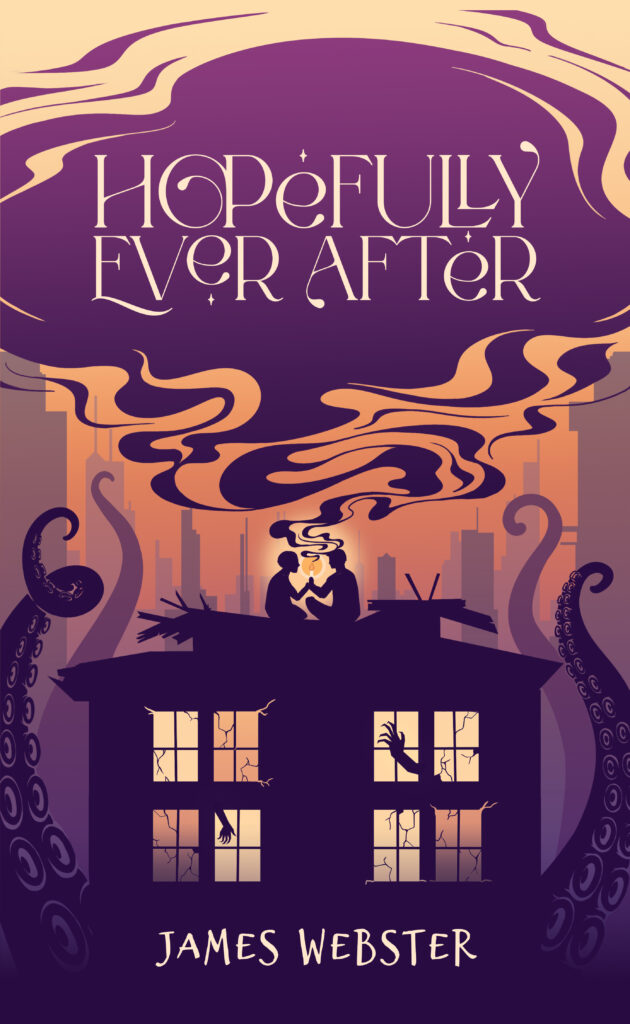
I’m not sure if all the stories in my book, Hopefully Ever After, can really be described as hopepunk. I think maybe some of them are too neat. Some of them aren’t grubby enough, perhaps. But I do think they contain a lot of ‘hope as a verb’. The characters in these stories do hope, the make hope, and they act as if hope is real even when they know deep down that it is not.
I would say, as well, that I think the act of writing it was my own little bit of hopepunk. I wrote a lot of these stories simply because the world was dark and I wanted to make it a bit brighter for my friends.
Perhaps it is delusional to think that something as simple as a few words can light a fire against the overwhelming dark, but hey… what is hope if not delusion?
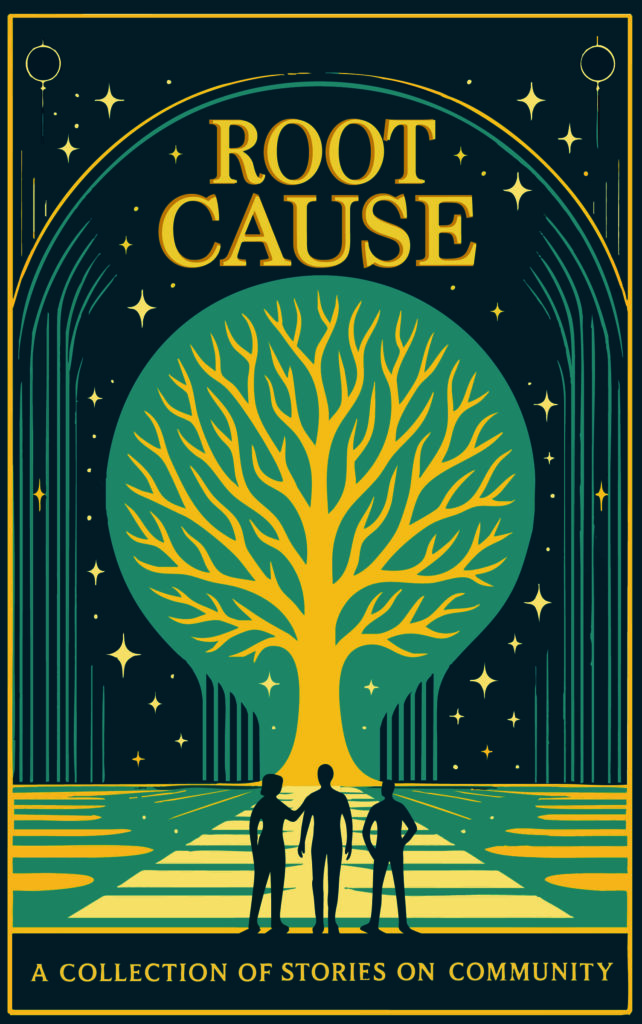
Many thanks to James Webster for writing this post and sharing his journey with Hopepunk. James has not only published Hopefully Ever After, but a handful of other titles as well! All of them feature 52 pieces of flash fiction based around different themes… can you guess what they are based on the covers below?



© Inspired Quill 2026 | Website by Big Red Web Design
